
Seoraksan can be one of the highlights of an autumn trip to South Korea, but two wrong assumptions can quickly ruin the day: expecting a direct KTX train to Sokcho and treating Seoraksan as one simple sightseeing stop. In 2026, the railway to Sokcho is not open, the road into the park can become heavily congested, and the famous cable car only sells tickets on the day of travel.
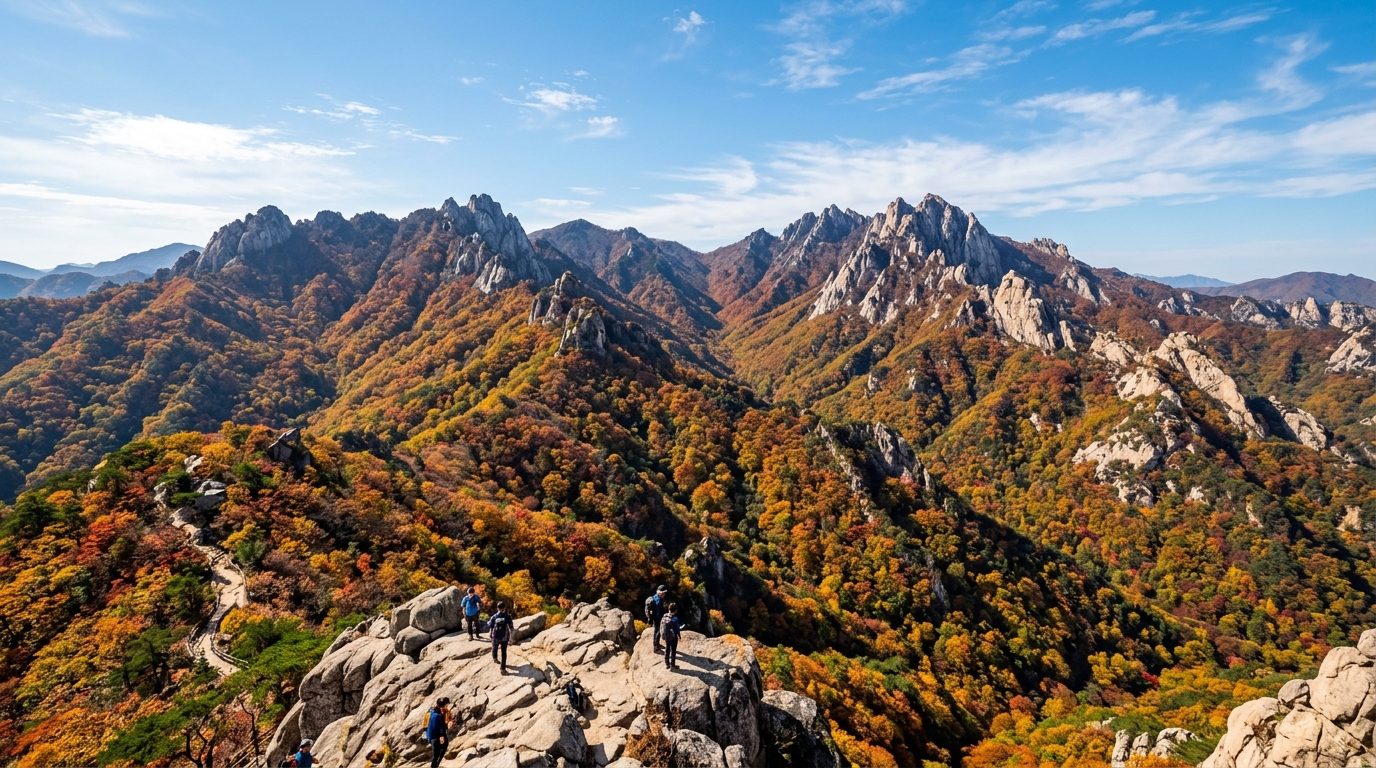
Seoraksan stands apart because grey granite peaks, red maples, yellow leaves, deep-green pines, and clear mountain streams appear in the same landscape. The scenery is memorable, but the quality of the visit depends on choosing the correct entrance, route, and transport plan.

Short Answer: There Is No KTX to Sokcho in 2026
Despite information that sometimes appears in outdated or speculative travel content, there is no operating KTX service from Seoul to Sokcho in 2026. Sokcho does not yet have a passenger railway station.
The Chuncheon–Sokcho railway is still under construction. South Korea’s official 2026 transport plan lists the railway’s target opening for 2029. Do not go to Seoul Station or Cheongnyangni Station expecting to board a direct Sokcho train.
For most foreign travelers, the practical 2026 route is:
- Take an express or intercity bus from Seoul to Sokcho.
- Transfer to local Bus 7 or 7-1 for Seoraksan Sogongwon.
- Use Naver Map or KakaoMap to confirm the correct stop and live route.
Best Time to See Seoraksan’s Autumn Foliage
There is no guaranteed peak-foliage date. Seoraksan’s colors change by elevation, and the timing depends on temperature, rain, wind, and typhoons. Leaves normally begin changing around the higher ridges before the color moves down toward the valleys and Sogongwon area.
For many visitors, October offers the best chance of seeing autumn color, but do not book a single date based only on a previous year’s forecast. A strong windstorm can remove leaves quickly, while warm weather can delay the season.
2026 forecast status: As of August 11, the official sources checked for this guide had not published a confirmed 2026 peak date. Previous-year dates are not presented as a 2026 forecast. This section should be updated when an official 2026 outlook becomes available.
Check Korean weather reports, recent park photos, and Seoraksan National Park notices shortly before visiting. Search for these Korean terms if English information is limited:
- 설악산 단풍 — Seoraksan autumn foliage
- 단풍 절정 — peak foliage
- 탐방로 통제 — trail closure or restriction
- 입산 통제 — mountain entry restricted
Weekday or Weekend?
A weekday is strongly recommended during autumn. On peak weekends and public holidays, traffic can slow before the park entrance, buses may be crowded, and popular trails can feel more like a procession than a quiet mountain walk.
If a weekend is your only option, stay overnight in Sokcho and travel to the park early the following morning. This gives you a better chance of reaching Sogongwon before the busiest part of the day.
How to Travel from Seoul to Seoraksan
Option 1: Express Bus from Seoul Express Bus Terminal
This route is convenient if you are staying around Gangnam or near Subway Lines 3, 7, or 9.
- Departure: Seoul Express Bus Terminal, also called Seoul Gyeongbu Terminal
- Arrival: Sokcho Express Bus Terminal
- Typical journey: Roughly 2 hours 20 minutes to 3 hours or longer, depending on the service and traffic
- Booking: Check the official KOBUS express bus service, Tmoney GO, or the terminal ticket counter
Autumn weekend seats can sell out, especially for useful early departures and evening return buses. Book ahead when possible. App availability, English support, foreign-card acceptance, and identity verification may depend on your device or account settings.
Option 2: Intercity Bus from Dong Seoul Bus Terminal
Dong Seoul Bus Terminal is next to Gangbyeon Station on Seoul Subway Line 2. It is often a practical departure point for travelers staying north of the Han River.
- Departure: Dong Seoul Bus Terminal
- Arrival: Sokcho Intercity Bus Terminal
- Typical journey: Approximately 2 hours 20 minutes to 3 hours or longer
- Booking: Check the current intercity-bus platform or purchase at the terminal
Express and intercity buses are normally comfortable, with assigned seats and luggage storage underneath. Travel time can increase substantially on Friday afternoons, Saturday mornings, holiday periods, and peak-foliage weekends.
From Sokcho to Seoraksan Sogongwon
Local Bus 7 and Bus 7-1 serve the main Sogongwon entrance area. Search for 설악산소공원 in Naver Map or KakaoMap and check that you are boarding in the correct direction.
The ride commonly takes around 30 to 50 minutes, but autumn traffic can make it longer. The exact stop, route, and timetable should be confirmed through the Sokcho city bus information system.
A T-money card can be used on local buses. Tap when boarding and again when getting off. However, your T-money balance does not reserve or replace the separate ticket required for the long-distance bus from Seoul.
Taxi Option
A taxi from central Sokcho is useful when traveling in a small group, carrying luggage, or trying to reach the park early. Use a taxi app or ask your accommodation to help. Road congestion still affects taxis, and return availability may become limited when many visitors leave at the same time.
Driving to Seoraksan
Enter 설악산소공원 rather than simply “Seoraksan” in your Korean navigation app. Seoraksan covers a large area with several entrances, and choosing the wrong starting point can place you far from your intended trail.
Parking is paid, and spaces or approach roads may fill during peak periods. Leaving Seoul early does not guarantee a fast arrival if you join the main weekend traffic toward Gangwon-do.
Essential Apps and Travel Tools
- Naver Map: Usually the most useful choice for Korean place names, walking directions, bus stops, and public transportation routes.
- KakaoMap: A good alternative for checking routes and nearby places.
- Papago: Useful for translating menus, signs, notices, and short conversations through the camera or text function.
- T-money card: Convenient for local buses, subways, and many taxis. Cards are sold at many convenience stores, although stock and top-up methods can vary.
- Portable battery: Navigation, translation, photography, and cold weather can drain your phone faster than expected.
Google Maps may still display general place information, but its walking and navigation functions in South Korea can be less useful than those of Korean map apps. Save important locations in Naver Map before leaving Seoul.
Choose One Seoraksan Plan That Matches Your Fitness
Many first-time visitors get confused at this point. “Going to Seoraksan” can mean an easy temple walk, a cable-car visit, a valley hike, or a steep mountain climb. These are not interchangeable experiences.
Easy Option: Sogongwon and Sinheungsa Temple
This is a suitable choice for families, travelers with limited time, or anyone who wants autumn scenery without a demanding hike. From the Sogongwon entrance, follow the main path toward Sinheungsa Temple and the surrounding forest.
The route gives you mountain views, streams, foliage, and access to the cable-car station without committing to a long climb. Paths can still be uneven, so comfortable shoes are recommended.
Low-to-Moderate Option: Biseondae
The walk from Sogongwon to Biseondae is approximately 3 kilometers one way. Much of the route follows a stream through the valley, making it one of the most approachable ways to experience Seoraksan’s autumn atmosphere.
Allow time for photographs and rest stops. The path is less demanding than Ulsanbawi, but it is still a mountain trail with stone and uneven surfaces. After rain, wet leaves and rocks can be slippery.
Do not automatically continue toward Geumganggul Cave just because you have reached Biseondae. The path becomes much steeper and more demanding beyond the easier valley section.
Challenging Option: Ulsanbawi
The Ulsanbawi route is approximately 7.6 kilometers round trip and is commonly estimated at around four hours, although your actual time will depend on fitness, crowds, and rest stops.
The early section past Sinheungsa and Heundeulbawi is relatively manageable. The final ascent includes steep stairs and sustained climbing. Wear proper hiking shoes, carry water, and avoid treating this as a casual walk in fashion sneakers.
Before choosing any longer route, review the latest course and closure information through the Korea National Park Service’s Seoraksan trail guide.
Scenic Option: Seorak Cable Car and Gwongeumseong
The Seorak Cable Car offers high-elevation views without a full mountain climb, but it is not a guaranteed or reservation-based attraction.
- Advance reservations are not accepted.
- Tickets are sold at the park on the day of travel.
- Operating hours are normally posted one day ahead.
- Strong wind, fog, or other weather conditions can delay or stop service.
- Autumn queues can be long even when the cable car is operating normally.
As checked in July 2026, the official round-trip fare is 16,000 won for adults and 12,000 won for children, with different rules for infants and eligible discounts. Prices may change, so confirm through the Seorak Cable Car – official fares and visitor guide.
The cable car takes you close to Gwongeumseong, but it does not remove all walking. Reaching the upper viewpoints involves uneven rock and exposed sections. Wear shoes with grip and do not climb beyond your comfort level.

Important 2026 Warning: Heullimgol Uses a Different Entrance
Heullimgol Valley is another popular Seoraksan autumn route, but it is not reached through the Sogongwon entrance described above. It begins in Yangyang, on a different side of the national park.
For the 2026 autumn season, the Heullimgol section from Heullimgol Visitor Support Center to Yongso Samgeori is scheduled to operate under a reservation system from October 1 through November 30. Entry hours and access rules differ from the main Sogongwon trails.
If Heullimgol is your goal, make the required reservation through the National Park Service reservation system and plan transportation specifically for that entrance. Bus 7 and 7-1 to Sogongwon will not take you there.
What Seoraksan Costs
There is no general admission ticket simply to enter the national park at Sogongwon. However, you should budget separately for:
- Long-distance bus tickets between Seoul and Sokcho
- Local bus or taxi transportation
- Cable-car tickets
- Parking if you drive
- Food, drinks, and optional purchases
- Accommodation if you stay overnight
Cards are widely accepted in South Korea, but carrying some Korean won is still useful for T-money top-ups or smaller purchases. Do not bring cash specifically for a nonexistent national-park entrance fee.
What to Wear and Pack
- Hiking shoes or trail shoes: Choose footwear with good grip. Wet stone, fallen leaves, and metal stairs can become slippery.
- Layered clothing: The base area can feel comfortable while higher or shaded sections are cold and windy.
- Light windproof jacket: More useful than one heavy layer when your body temperature changes during a climb.
- Water and a small snack: Do not assume every facility will be open when you need it.
- Portable battery: Keep enough power for maps, translation, bus information, and emergencies.
- Small rubbish bag: Carry your waste out if no bin is available.
Seoraksan is a real mountain environment. Weather warnings, forest-fire prevention periods, and safety concerns can result in trail closures. Check conditions on the morning of your visit instead of relying only on a plan made weeks earlier.
A Realistic Seoul Day-Trip Plan
A Seoraksan day trip from Seoul is possible, but it will be long. Keep the plan focused:
- Reserve an early bus from Seoul to Sokcho.
- Transfer to Bus 7, Bus 7-1, or a taxi.
- Choose one main activity: Biseondae, Ulsanbawi, or the cable car with a shorter walk.
- Return to Sokcho with enough time for your reserved bus to Seoul.
- Build in extra time for traffic and local-bus delays.
Do not try to combine Ulsanbawi, Biseondae, Gwongeumseong, a full market visit, and a relaxed coastal dinner in one rushed day. In Korea, this is where the 8282 mindset needs a little adjustment. Mountain traffic and trail conditions set the pace.
A Better One-Night Sokcho Plan
Day 1: Seoul to Sokcho
- Travel to Sokcho by express or intercity bus.
- Leave luggage at your accommodation.
- Visit Sokcho Tourist and Fishery Market.
- Walk near Cheongchoho Lake, Sokcho Beach, or the coastline.
- Sleep early and prepare your hiking equipment.
Day 2: Seoraksan
- Travel to Sogongwon early.
- Complete one trail suited to your fitness.
- Check the cable-car situation only if it fits your schedule.
- Return to Sokcho for a meal.
- Take an evening bus back to Seoul or continue your Gangwon-do trip.
This schedule reduces the risk of missing your return bus and gives you more flexibility if the weather changes.
What to Eat in Sokcho After the Hike
Sokcho is a coastal city with its own food identity, so it is worth leaving time for a proper meal instead of returning directly to Seoul.
Ojingeo Sundae (오징어순대)
Ojingeo sundae is squid filled with a seasoned mixture that may include vegetables, noodles, tofu, or other ingredients. It is commonly sliced and sometimes coated with egg before being pan-fried. Recipes differ by restaurant, so ask about ingredients if you have allergies or dietary restrictions.
Dakgangjeong (닭강정)
This is crispy chicken coated in a sweet, savory, and sometimes spicy sauce. Sokcho Tourist and Fishery Market has several well-known dakgangjeong shops. Popular stores may have queues, but choosing the longest line is not essential for enjoying the dish.
Gamja Ongsimi (감자옹심이)
Gamja ongsimi is a warm potato-dumpling soup associated with Gangwon-do. The chewy dumplings and hot broth make it especially satisfying after a cool autumn hike.
Coastal Cafes
For coffee and an East Sea view, check current cafes around Sokcho Beach and the coastal neighborhoods. Businesses, opening hours, and last-order times can change, so confirm in Naver Map rather than traveling across the city for one unverified recommendation.
Useful Korean for Seoraksan and Sokcho
- 설악산소공원 가요? — Does this go to Seoraksan Sogongwon?
- 이거 주세요. — Please give me this.
- 안 매운 음식 있어요? — Do you have food that is not spicy?
- 매표소 — Ticket office
- 탐방로 — Hiking or exploration trail
- 운행 중단 — Service suspended
- 입산 통제 — Mountain entry restricted
- 막차 — Last bus or last service
- 화장실 — Restroom
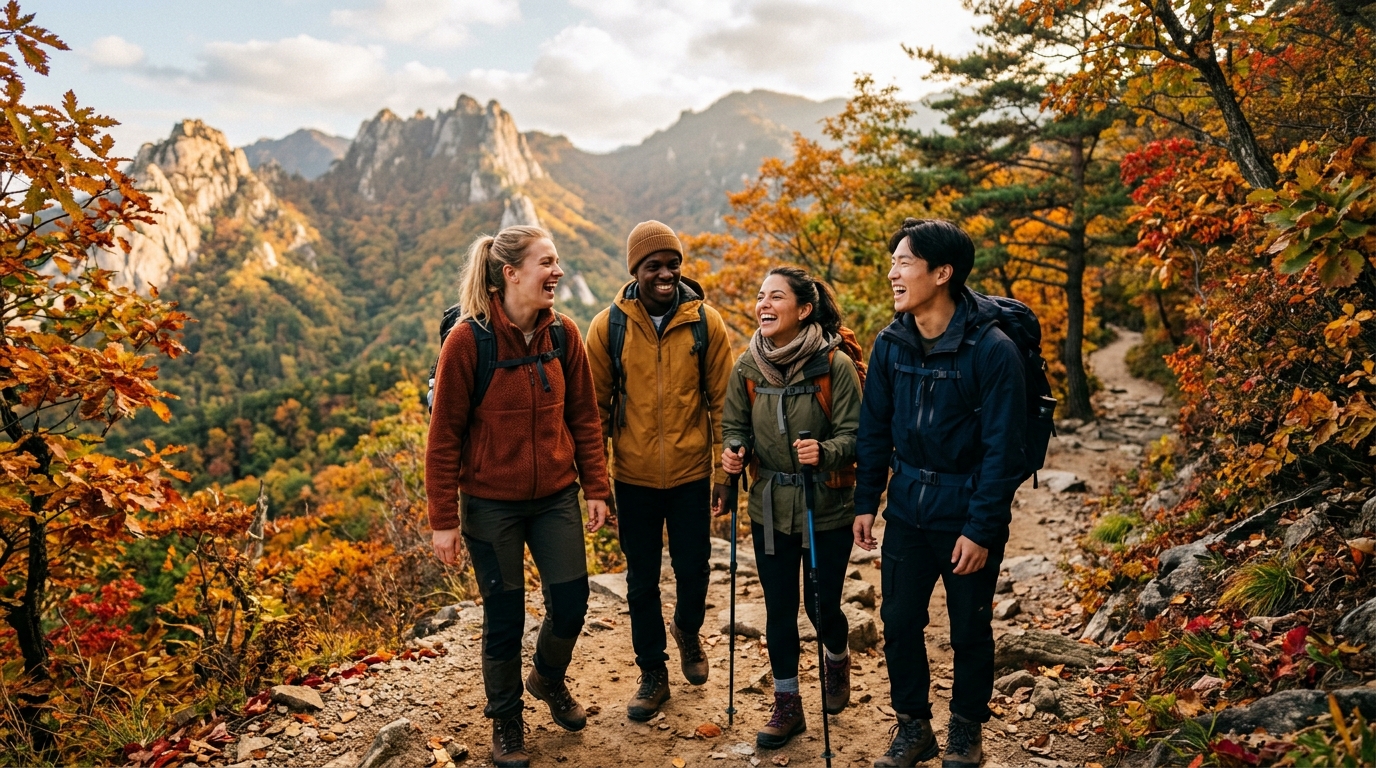
Most staff working around major visitor areas are accustomed to travelers who speak limited Korean. Pointing at a map or ticket screen and using Papago is usually more effective than speaking a long translated sentence.
Common Mistakes Foreign Visitors Make
- Searching for a KTX ticket to Sokcho: Direct railway service is not operating in 2026.
- Using “Seoraksan” as the only destination: The national park has multiple entrances that are far apart.
- Assuming the cable car can be booked online: Tickets are sold on-site on the day of travel.
- Planning around one guaranteed foliage date: Autumn color changes by elevation and weather.
- Arriving on a peak weekend without a bus reservation: Useful departures may sell out.
- Wearing casual fashion shoes: Even approachable routes include uneven stone and slippery leaves.
- Trying to complete too many trails: Choose one route that matches your fitness and available daylight.
- Ignoring the return journey: Check your final local bus and reserve your Sokcho-to-Seoul seat in advance.
Final Seoraksan Autumn Checklist
- Reserve Seoul–Sokcho bus tickets.
- Download Naver Map or KakaoMap.
- Save 설악산소공원 as your destination.
- Check the latest foliage and weather reports.
- Review trail closures and entry-time restrictions.
- Check the cable-car website one day before visiting.
- Choose one realistic trail.
- Wear shoes with grip and pack layers.
- Carry water, a portable battery, and some Korean won.
- Leave extra time for autumn traffic.
Is Seoraksan Worth Visiting in Autumn?
Yes—if you prepare for the transport, crowds, and mountain conditions. Seoraksan’s autumn scenery is memorable because the foliage is set against sharp granite formations and deep valleys rather than appearing as an ordinary city-park display.
The best experience does not come from rushing through every attraction. Pick the correct entrance, arrive early, choose a route that fits your body, and leave room for the weather to change your plan.
For more help with Korean transportation, travel apps, regional itineraries, and practical planning, continue with the Travel Guide. Before your travel day, check your bus reservation, Seoraksan trail status, and cable-car notice one final time.


0 Comments