
It is 10:30 PM on a Tuesday. You are at the third round of drinks with your coworkers — the dreaded sam-cha (3차) — and more soju bottles keep appearing on the table. You have an important presentation at 9 AM tomorrow, but your department head, the bujangnim (부장님), looks ready to continue the night at noraebang.
This is one of the most confusing moments for many foreign professionals in Korea: you want to go home, but you do not want to look rude, cold, or “not part of the team.” Welcome to the classic Korean hwesik (회식) dilemma.
The good news is that leaving early does not have to damage your reputation. In many cases, what matters most is not whether you leave, but how you leave. With the right timing, a respectful phrase, and a little nunchi (눈치), you can make a graceful exit without offending your boss or coworkers.

Jin's 8282 Quick Summary
- The problem: You need to leave a Korean company dinner early, but you are worried about offending your boss or looking disconnected from the team.
- Who this helps: Foreign workers, teachers, interns, and professionals working in Korean companies or Korean-style office environments.
- The safest strategy: Mention your situation early, give a simple and respectable reason, thank the senior person properly, and leave at a natural break.
Why Leaving a Korean Hwesik Can Feel So Difficult
A hwesik is not always just a casual dinner. In many Korean workplaces, especially more traditional companies, it can feel like an unofficial extension of the workday. It is a place where coworkers bond, managers observe team chemistry, and people try to build trust outside the office.
This can be confusing if you come from a culture where work and personal time are clearly separated. You may think, “My work is finished, so I should be free to go home.” That is reasonable. But in some Korean office environments, leaving too suddenly may be misunderstood as rejecting the group atmosphere.
This does not mean every Korean company has the same culture. A startup in Pangyo, an international office in Seoul, and a manufacturing company in Ulsan may all feel very different. Still, in many workplaces, nunchi — the ability to read the room — matters a lot.
If the most senior person is still present and the group mood is active, disappearing without saying goodbye can feel disrespectful. A quiet “ghost exit” may seem normal in some countries, but in a Korean company dinner setting, it is usually better to say goodbye properly.

The 8282 Strategy: Prepare, Communicate, Exit Respectfully
The best way to leave a hwesik early is not to suddenly escape. It is to prepare your reason, communicate it before the night gets too late, and leave with proper thanks.
Step 1: Mention Your Situation Early
Do not wait until everyone is already drunk at noraebang. The best timing is before the dinner starts or during the first round, when the atmosphere is still calm.
You can casually tell your direct manager:
“I’m really looking forward to tonight, but I may need to leave a bit early because I have something important tomorrow morning.”
This small early warning makes a big difference. It shows that your departure is not a sudden rejection of the team. It also gives your manager time to understand your situation before the night becomes more emotional or chaotic.
Step 2: Use a Simple and Respectable Reason
Your reason should be short, believable, and respectful. Avoid overexplaining. In Korea, a brief and polite reason often works better than a long personal story.
Option 1: Family or Personal Matter
가족에게 중요한 일이 있어서 먼저 일어나겠습니다.
Gajok-ege jung-yohan il-i isseo-seo meonjeo ireonaget-seumnida.
I have an important family matter, so I will leave first.
Family-related reasons are usually understood in Korea. You do not need to explain every detail. Keeping it private can actually make it sound more natural.
Option 2: Health and Condition
요즘 컨디션이 좋지 않아서, 내일 업무를 위해 먼저 들어가 보겠습니다.
Yojeum keon-di-syeon-i jochi anaseo, nae-il eommu-reul wihae meonjeo deureoga boget-seumnida.
I have not been feeling my best lately, so I will head home first for tomorrow’s work.
This phrase works because it connects your health to your work performance. You are not simply saying, “I want to go home.” You are saying, “I want to be in good condition for work tomorrow.”
Option 3: Early Meeting or Work Preparation
내일 아침 일찍 중요한 미팅이 있어서 준비해야 합니다.
Nae-il achim iljjik jung-yohan miting-i isseoseo junbi-haeya hamnida.
I have an important meeting early tomorrow morning, so I need to prepare.
This is one of the safest work-related reasons. It shows responsibility and makes your early exit connected to company performance, not personal dislike of the event.
Step 3: Say Goodbye in the Right Order
When it is time to leave, do not suddenly stand up and announce it to everyone. Wait for a natural pause. Then quietly speak to your direct manager first.
After that, if a higher-ranking person is present, such as the team leader or department head, politely say goodbye to them as well. In a Korean workplace, hierarchy still matters in many social situations.
A simple exit flow looks like this:
- Tell your direct manager first.
- Thank the person who organized or paid for the dinner.
- Say goodbye to the most senior person present.
- Bow slightly and leave without lingering too long.
The goal is a clean, respectful exit — not a dramatic escape.
Best Timing to Leave a Korean Company Dinner
Timing is one of the most important parts of leaving a hwesik early. Even a good reason can feel awkward if the timing is bad.
Better Timing
- At the end of the first round, before the group moves to a second location.
- When people are standing up to change places.
- After the main meal is finished.
- When your manager is not in the middle of an important conversation.
Worse Timing
- Right after arriving.
- During the main meal.
- While the senior person is giving a toast or telling a story.
- After you have been sitting silently all night without participating.
In many cases, the smoothest exit point is between il-cha (1차, first round) and i-cha (2차, second round). That transition gives you a natural excuse to say, “I should head home from here.”
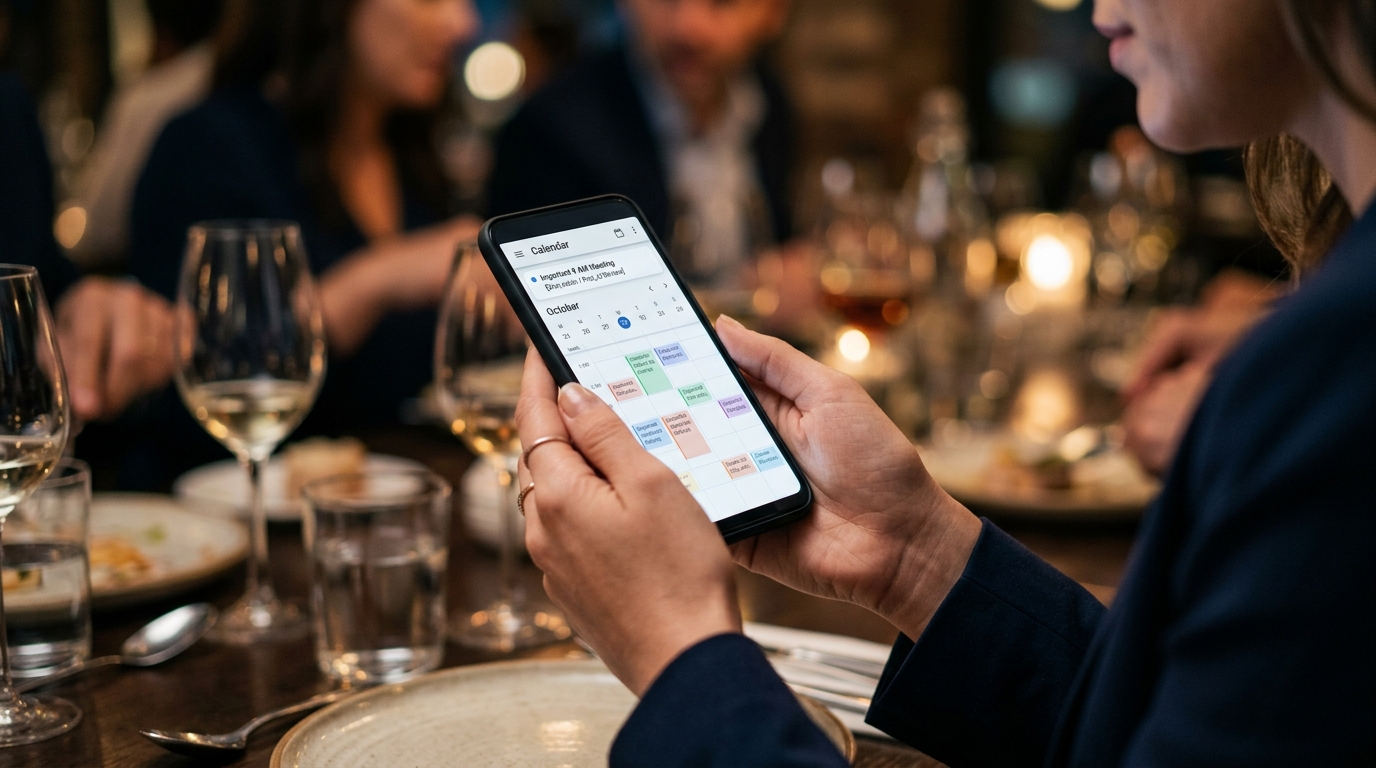
Jin's Pro Tips for a Smooth Hwesik Exit
Participate While You Are There
If you want to leave early, make sure you are present while you are still there. Join conversations, smile, react, and show that you appreciate being included. You do not need to become the loudest person at the table, but you should not look like you are simply waiting to escape.
Know the “One Last Glass” Moment
Sometimes when you say you are leaving, a senior coworker may offer you majimak han jan (마지막 한 잔), meaning “one last glass.” This is often a friendly send-off gesture.
If you drink alcohol and feel comfortable, you may accept it politely. If you do not drink or cannot drink more, you can still respond respectfully:
죄송합니다. 오늘은 컨디션 때문에 술은 어렵지만, 정말 감사드립니다.
Joesonghamnida. Oneul-eun keondisyeon ttaemune sul-eun eoryeopjiman, jeongmal gamsadeurimnida.
I’m sorry. Because of my condition today, alcohol is difficult, but thank you very much.
Send a Short Thank-You Message the Next Day
A simple message the next morning can help maintain a good impression.
부장님, 어제 저녁 정말 즐거웠습니다. 감사합니다.
Bujangnim, eoje jeonyeok jeongmal jeulgeowot-seumnida. Gamsahamnida.
Thank you for the wonderful dinner last night.
This shows that you did not leave because you disliked the event. You appreciated the dinner and still respected the group.
Watch Your Korean Coworkers
Your Korean coworkers are your best guide. Notice when they leave, who they speak to first, and what phrases they use. Every company has its own unwritten rules, so copying the most socially skilled coworkers can help you avoid awkward mistakes.
Rookie Mistakes to Avoid
- Do not disappear without saying goodbye. A ghost exit can easily be misunderstood in a Korean workplace dinner setting.
- Do not complain about the hwesik. Even if you are tired, avoid saying negative things at the table or in the office afterward.
- Do not make your excuse too dramatic. A fake emergency call can look childish if people sense it is not real.
- Do not overshare. A short, polite reason is usually better than a long explanation.
- Do not refuse alcohol too sharply. If you do not drink, give a polite reason and show appreciation.
- Do not leave before showing basic participation. If you barely talk and leave early, it may feel colder than you intended.
Useful Korean Phrases for Leaving a Hwesik
These phrases are practical, polite, and easy to use in real Korean office situations.
- 먼저 들어가 보겠습니다.
Meonjeo deureoga boget-seumnida.
I will get going first. - 오늘 정말 즐거웠습니다.
Oneul jeongmal jeulgeowot-seumnida.
I had a really great time today. - 내일 뵙겠습니다.
Nae-il boepget-seumnida.
See you tomorrow. - 저는 술을 잘 못합니다.
Jeo-neun sul-eul jal mot-hamnida.
I cannot drink alcohol well. - 덕분에 잘 먹었습니다.
Deokbun-e jal meogeot-seumnida.
Thank you for the meal. - 먼저 일어나서 죄송합니다.
Meonjeo ireonaseo joesonghamnida.
I am sorry to leave first.
Final 8282 Hwesik Exit Checklist
Before your next company dinner in Korea, use this quick checklist.
- [ ] I know my company’s general hwesik style.
- [ ] I have a simple and respectful reason ready.
- [ ] I will mention my situation early to my direct manager.
- [ ] I will participate positively while I am there.
- [ ] I will leave at a natural break, not in the middle of the main meal.
- [ ] I will say goodbye to the right people before leaving.
- [ ] I will send a short thank-you message the next day if appropriate.
Final Thoughts: Respect the Culture, But Protect Your Energy
Learning how to handle hwesik culture is a real survival skill for working in Korea. You do not need to stay out until midnight every time to prove that you care about your team. But you do need to understand the social meaning behind the event.
The key is balance. Show up, participate, express appreciation, and leave respectfully when you need to. A polite exit is not rude. In fact, when done well, it can show maturity, professionalism, and good nunchi.
If you are working in Korea or preparing for your first Korean company dinner, save these phrases before your next hwesik. They may help you protect your sleep, your work performance, and your office relationships at the same time.
Korean workplace culture can vary widely depending on the company, industry, region, generation, and team leader. This article is based on general everyday-life experience in Korea and is for informational purposes only. If you are dealing with workplace pressure, harassment, forced drinking, or serious labor concerns, consider checking official labor guidance or speaking with a trusted HR representative, labor consultant, or relevant public support center.
Related guides
- Korean Drinking Etiquette: How to Say No, Pour Soju, and Leave a Hoesik
- Freelancing in Korea: Rules for Foreign Residents
- Korean Employment Contracts: 5 Clauses to Check


0 Comments