
At two o’clock on a weekday, three cafes on the same Seoul block can be doing completely different jobs. One is a quick stop for an iced Americano. Another is full of laptops and textbooks. A third has a small fan event, with decorated cup sleeves stacked beside the register.
That variety explains more than a headline about Korea having “many cafes.” A cafe can be a meeting place, a temporary desk, a quiet hour alone, or simply somewhere to wait between plans. The useful question is not how many cafes Korea has. It is why so many different kinds of space operate under the same name.

The Short Answer
Korean cafes work as flexible rooms outside the home and workplace. People use them to meet friends, study, work for a while, hold an informal conversation, or spend time alone without feeling out of place. This is one reason the idea of a “third place”—somewhere between home and work—fits Korean cafe culture well.
But the phrase should not be stretched too far. A small neighborhood cafe, a large bakery cafe, a chain branch, and a paid study cafe do not offer the same experience or follow the same house rules. The sign on the door matters more than a general rule from social media.
From Dabang to Today’s Cafe
Modern cafe culture did not appear from nowhere. The National Folk Museum of Korea’s coffee-culture exhibition includes photographs of dates and weddings, a television used in a Korean dabang, coffee cups, and other objects from everyday life. Its materials show that dabang were not only places to drink coffee. They were also used for meetings and introductions.
The museum’s 2026 international education program still uses its reconstructed Yaksok Dabang to explain the path from instant coffee mix and traditional coffeehouses to contemporary cafe culture and the eoljukah habit—drinking iced Americano even in cold weather. That history is more useful than treating every new cafe as an Instagram invention.
Over time, the drink became only one part of the visit. Interiors became brighter, menus grew, smoking disappeared from most indoor spaces, and customers began bringing phones and laptops. The social purpose also widened. Older dabang and current cafes are not identical, but both have offered a neutral place to meet outside home.
One Name, Several Different Spaces
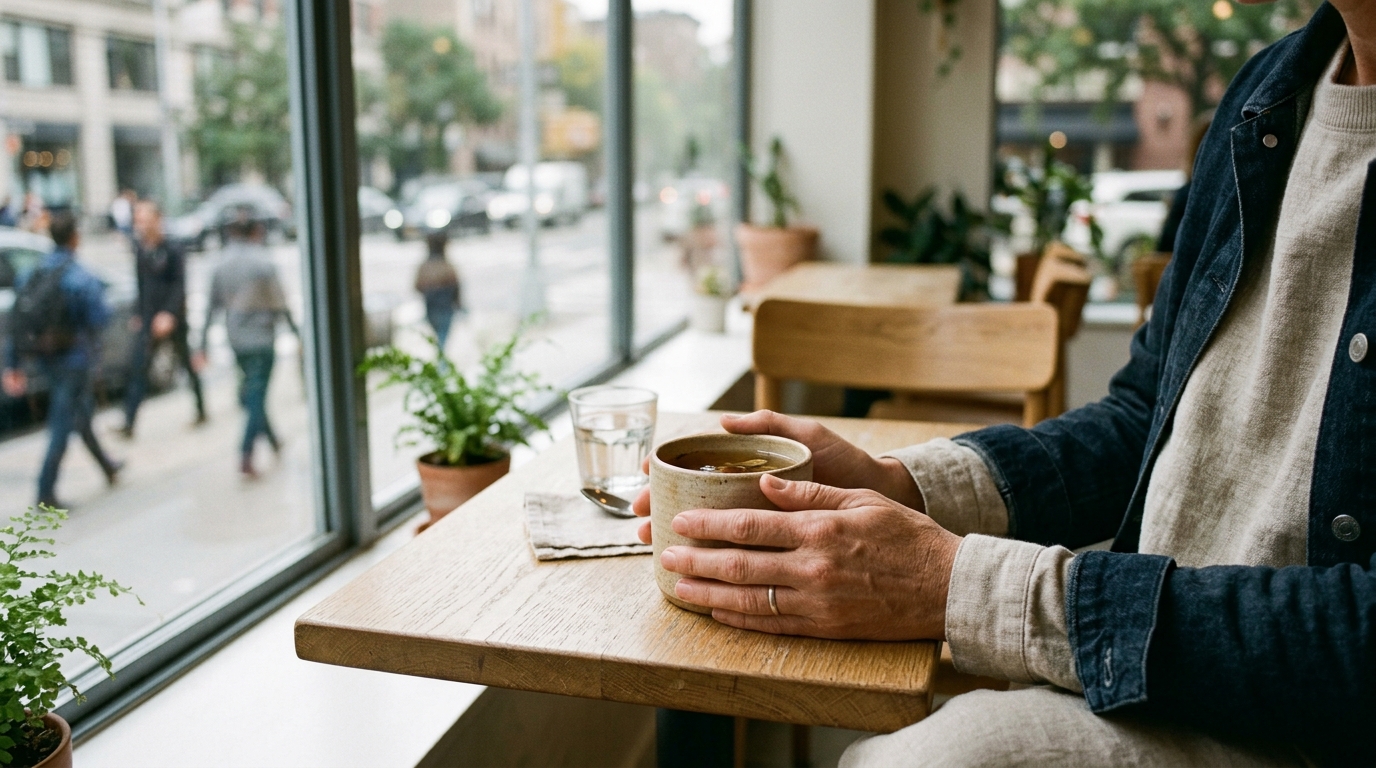
A neighborhood cafe may have fewer than a dozen seats and depend on regular customers. It is usually a poor choice for a four-hour laptop session when every table is occupied.
A large chain or bakery cafe often has more seating, clear pickup and tray-return areas, and enough background noise for conversation. Even then, outlet access and laptop policies differ by branch.
A study cafe is closer to a quiet paid workspace than a normal coffee shop. Customers usually pay for time or a pass, and silence is part of the product. Do not enter expecting the atmosphere of a social cafe.
A destination cafe may be built around architecture, a view, a bakery, or a seasonal theme. These places can require a special trip and may be busiest on weekends. “Near Seoul” in a short video does not always mean a convenient subway ride.
A fan event cafe temporarily hosts a birthday or anniversary event for an artist. Cup sleeves, photocards, or other items may be tied to a particular drink, date, or stock limit. Check the organizer’s current notice and the participating branch before traveling; there is no nationwide cup-sleeve rule.

Why Studying and Spending Time Alone Feel Normal
Using a cafe alone is ordinary in Korea. You may see someone reading, editing a document, or simply looking at a phone between appointments. Being alone in a public room can feel less isolating than staying home and less demanding than meeting another person.
That does not make every seat an unlimited desk. The popular word cagongjok (카공족) refers to people who study or work in cafes, but the word does not grant a right to occupy any table for any length of time. A large branch on a quiet afternoon and a small cafe during the weekend rush call for different judgment.
Cafe use also connects with other parts of city life. Small homes, long commutes, flexible work, and the pressure to stay productive can all affect how a person uses time between home and work. For more context, see Honjok Housing in Seoul and Aggressive Productivity and Work Culture in Seoul.
Practical Cafe Etiquette
Most awkward moments can be avoided by reading the room before unpacking your laptop or moving furniture.
- Order before settling in unless a sign or staff member tells you to choose a seat first.
- Check the pickup and tray-return system. Some cafes call a receipt number, some use a vibrating pager, and others bring the order to the table.
- Read posted laptop or seating limits. A cafe may restrict laptop use at certain tables or during busy hours.
- Keep calls short and quiet. If the room is nearly silent, step outside for a long conversation.
- Ask before moving chairs, using a wall outlet, or filming. Other customers are not part of the decor.
- Do not treat a bag or laptop as a reservation system. Leaving valuables unattended is a risk even if you see other people doing it.
If you are unsure, one sentence solves most problems: “Yeogiseo noteubuk sseodo dwaeyo?” (여기서 노트북 써도 돼요?, “May I use a laptop here?”). For broader public-space habits, see 10 Korean Etiquette Rules for First-Time Visitors.
What Cafe Scenes Do—and Do Not—Tell You About Korea
Cafes work well in Korean dramas because they are neutral. Characters can meet without inviting each other home, talk without the formality of an office, and leave when the conversation is over. The setting is believable, but it is still a set chosen for a story. It does not prove that every Korean date, friendship, or work discussion follows the same pattern.
The same caution applies to social media. A dramatic staircase, a perfect dessert, or a mountain view may be real, while the queue, travel time, minimum order, and return trip remain outside the frame. Save the Korean address, check the latest opening information from the cafe itself, and decide whether the trip makes sense for your day.

The Grounded Takeaway
Korean cafe culture is interesting because it is practical before it is symbolic. Cafes give people a place to meet, wait, work, celebrate a fan event, or be alone among others. Their history reaches back through the dabang, but their current forms respond to the way people use Korean cities now.
You do not need a grand theory to use one well. Choose a cafe that fits what you plan to do, read its signs, order fairly, and notice whether the room is designed for conversation, quiet work, or quick turnover. That small bit of attention tells you more about the space than its photos do.
Sources checked September 2, 2026
- National Folk Museum of Korea — Special exhibition materials on Korea’s coffee culture
- National Folk Museum of Korea — 2026 Discover the Real Daily Life of Koreans: Yaksok Dabang
- National Folk Museum of Korea Webzine — Dabang, Refreshed
House rules, opening hours, event benefits, and laptop policies vary by cafe and can change. Check the cafe or event organizer’s current notice before making a special trip.


0 Comments