
Working a Side Gig on an E-7 Visa in Korea in 2026: What Foreign Professionals Must Check First
If you are living in Korea on an E-7 visa, taking a side gig may sound simple at first. A small freelance project, weekend consulting work, online tutoring, paid translation, or a short-term business request can feel harmless.
But for E-7 visa holders, outside work is not just a money issue. It can become an immigration issue, a tax issue, and sometimes an employment contract issue. When I’ve seen foreigners struggle with this in Korea, the problem usually starts with one sentence: “I thought it would be okay because it was only a small job.”
As of 2026, the safer mindset is simple: before earning extra income outside your sponsoring company, check whether you need official permission for activities beyond your current sojourn status. In Korea, your visa status matters before the side income does.

Jin’s 8282 Quick Check
- Main point: An E-7 visa is generally tied to a specific job, employer, and professional activity.
- Before side work: Check whether you need permission for activities outside your current visa status.
- Do not rely only on: A verbal “OK” from your boss, cash payment, or the idea that “foreign clients do not count.”
- Official check: Contact the 1345 Immigration Contact Center or check HiKorea before starting.
Who This Is For
This guide is for foreign professionals in Korea who hold an E-7 visa and are thinking about earning income outside their main sponsoring company.
- IT specialists considering freelance development work
- Engineers asked to consult for another company
- Marketers, designers, translators, or content creators offered paid side projects
- Foreign professionals invited to paid lectures, workshops, or speaking events
- E-7 workers who already earned side income and are worried about visa renewal
This article focuses mainly on E-7 visa holders. Other visa types, such as E-2, D-2, D-10, F-2, F-5, and F-6, may follow different rules. If your visa is not E-7, use this article as a warning sign, not as a final answer.
Why Side Gigs Are Risky on an E-7 Visa
The E-7 visa is commonly known as the Specific Activities visa. That name is important. It usually means your permission to work in Korea is connected to the professional activity, company, and role approved by immigration.
In simple terms, an E-7 visa is not a general “work anywhere” permit. If your visa was approved for one company and one professional role, earning income from another activity may be treated as work outside your approved status.
That does not always mean side work is impossible. But it usually means you should check whether you need official approval before doing it. Korean immigration rules can be strict, and personal situations can vary depending on your job category, employer, contract, and the type of side work.
For more visa and money-related guides for foreigners in Korea, you can also explore the Korea Visa & Money Guide.

Real-Life Scenario: The “Small Freelance Project” Problem
Imagine this situation.
You work in Korea on an E-7 visa as a software engineer. A friend introduces you to a startup overseas. They ask you to build a small feature for USD 800. You work from your apartment in Seoul on weekends. The client is not Korean, the payment goes to your overseas account, and nobody at your Korean company knows.
Many people assume this is outside Korean immigration concern because the client is overseas. But the risk is that you are physically staying in Korea while performing paid work that may not be covered by your approved E-7 activity.
This is where foreigners can accidentally create a serious problem. The income may be small, but the immigration issue can be much larger than the payment itself.
Common Mistakes Foreigners Make
1. Thinking Your Boss’s Verbal Approval Is Enough
Your manager may say, “That sounds fine.” This can be helpful internally, but it is not the same as immigration approval.
For many side-work situations, you may need formal written consent from your sponsoring company and official permission from immigration. A casual KakaoTalk message or verbal conversation may not protect you during visa review.
2. Assuming Cash Jobs Are Safe
Cash payment may feel invisible, but it is risky. A client dispute, tax record, online advertisement, social media post, or report from another person can expose unauthorized work.
Korea is highly digital, and work history can appear in unexpected ways. The safer approach is not “How can I hide this?” The safer approach is “Can I get this approved properly?”
3. Believing Foreign Clients Do Not Count
Some E-7 holders believe that work for a foreign client is automatically separate from Korean immigration rules. That can be a dangerous assumption.
If you are living in Korea while doing the work, you should check whether the activity is allowed under your current visa status. The location of the client and the bank account may not be the only factors that matter.
4. Reporting Unauthorized Side Income Without Checking Visa Status
Reporting income for tax purposes can be responsible from a tax perspective, but it does not automatically fix a visa problem.
If the work was not approved under your visa conditions, a tax record may show income that immigration could question later. Tax compliance and immigration compliance are connected, but they are not the same thing.
5. Calling Paid Work a “Hobby”
A hobby becomes more complicated when money is involved.
If you sell design work, receive payment for translation, charge for lessons, accept consulting fees, or get paid for a performance, immigration may view it as work. Even if the amount is small, the activity can still matter.
Step-by-Step Guide: What to Do Before Taking a Side Gig
-
Check your employment contract.
Look for clauses about outside employment, conflict of interest, confidentiality, non-compete obligations, and company approval. Some companies restrict side work even before immigration becomes involved.
-
Define the side work clearly.
Prepare basic details: who will pay you, what work you will do, how long it will last, where the work will be performed, and how much you will be paid.
-
Ask your employer properly.
If your company approval is needed, ask HR or the authorized representative, not only your direct manager. Try to get written consent if the company agrees.
-
Contact 1345 before starting.
Call the 1345 Immigration Contact Center and explain your visa type, job, employer, and proposed side activity. Ask whether you need permission for activities outside your current sojourn status.
-
Confirm required documents.
Required documents can vary by case. You may need your passport, residence card, application form, employer consent, side-work contract, business registration documents from the other party, or other supporting documents.
-
Submit the application before working.
Do not start first and apply later. In immigration matters, timing matters. Permission should be handled before the paid activity begins.
-
Keep records after approval.
If approval is granted, keep copies of your permission, contracts, payment records, and communications. These may help during visa renewal or tax filing.
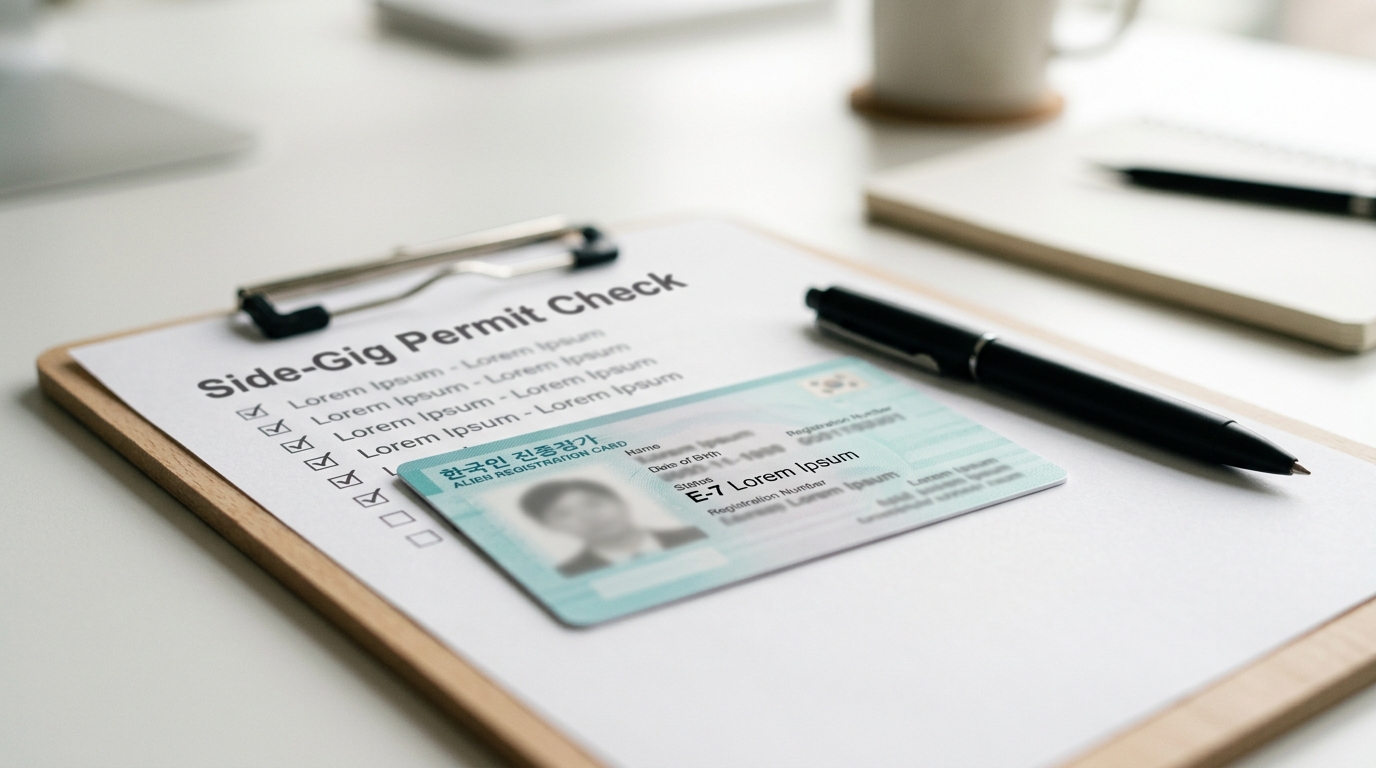
Documents You May Need to Prepare
The exact document list can change depending on your case, so always confirm with 1345 or your immigration office. Still, many foreigners should be ready to prepare documents like these:
- Passport
- Residence Card
- Application form
- Employment contract with your sponsoring company
- Written consent from your current employer
- Contract or offer letter for the side work
- Business registration information of the side-work company or client, if applicable
- Explanation of the work scope, period, and payment
- Any additional documents requested by immigration
8282 Checklist Before You Say Yes
- Have I checked my employment contract?
- Is the side work clearly related or unrelated to my E-7 role?
- Do I have written approval from my company if needed?
- Have I called 1345 or checked HiKorea?
- Do I know whether immigration permission is required?
- Have I received approval before doing any paid work?
- Can I explain this income clearly during visa renewal?
Practical Tips That Can Save You Trouble
Keep the Side Work Clearly Limited
If the side work is approved, keep it within the approved scope. Do not expand the work, increase the period, or change the client without checking whether another approval is needed.
Be Careful With Online Platforms
Freelance platforms, tutoring apps, paid creator platforms, and consulting marketplaces can leave clear records. If your profile shows that you are accepting paid work while living in Korea, that may create questions later.
Think About Visa Renewal Early
Visa renewal is often when past issues become visible. If your income records, employment history, or activities do not match your visa conditions, immigration may ask for an explanation.
Do Not Use Another Person’s Name
Some people try to receive payment through a friend, spouse, or family member. This can create bigger problems, especially if the arrangement looks like an attempt to hide unauthorized work.
When in Doubt, Get Professional Help
If the side work involves large income, a Korean company, repeated payments, business registration, or tax filing, consider speaking with an immigration administrative specialist, labor attorney, or tax professional.
What About F-Series Visas?
F-series visa holders, such as F-2, F-5, and F-6, often have more flexibility than E-7 visa holders. However, “more flexible” does not mean every activity is automatically simple.
If you are running a business, hiring people, teaching, doing regulated professional work, or earning income across borders, you may still need to consider tax registration, business reporting, professional licensing, or contract issues.
So if your long-term goal is more work freedom in Korea, moving from an E-series visa to an eligible F-series visa may be worth researching. But until your status actually changes, follow the rules of your current visa.
Summary: The Safe Rule for E-7 Side Gigs
The safest rule is this: if you are on an E-7 visa and someone wants to pay you for work outside your sponsoring company, check first.
- An E-7 visa is usually tied to a specific approved activity and employer.
- Side gigs may require permission before you start.
- Your employer’s verbal approval is not the same as immigration approval.
- Foreign clients and foreign bank accounts do not automatically remove the risk.
- Tax reporting and visa compliance should both be considered.
- Before accepting payment, contact 1345 or confirm through official immigration channels.
My honest 8282 advice is this: do not risk your Korean life over a side project that was not checked properly. Extra income is good, but visa stability is more important.

Final 8282 Action
Before you accept any side gig, write down the work details and contact 1345. If the answer is unclear, ask again, visit your immigration office, or speak with a qualified professional. One careful check now can prevent a serious visa problem later.
If you are building your life in Korea, keep learning the rules before they become problems. For more practical guides on visas, money, work, and daily systems in Korea, visit the Korea Visa & Money Guide on AllThingsK8282.


0 Comments