
Last checked: August 15, 2026
Last updated: October 5, 2026. Corrected Hwaseong Haenggung daytime hours to 09:00–18:00 year-round, with last admission at 17:00, following the official visitor guide.
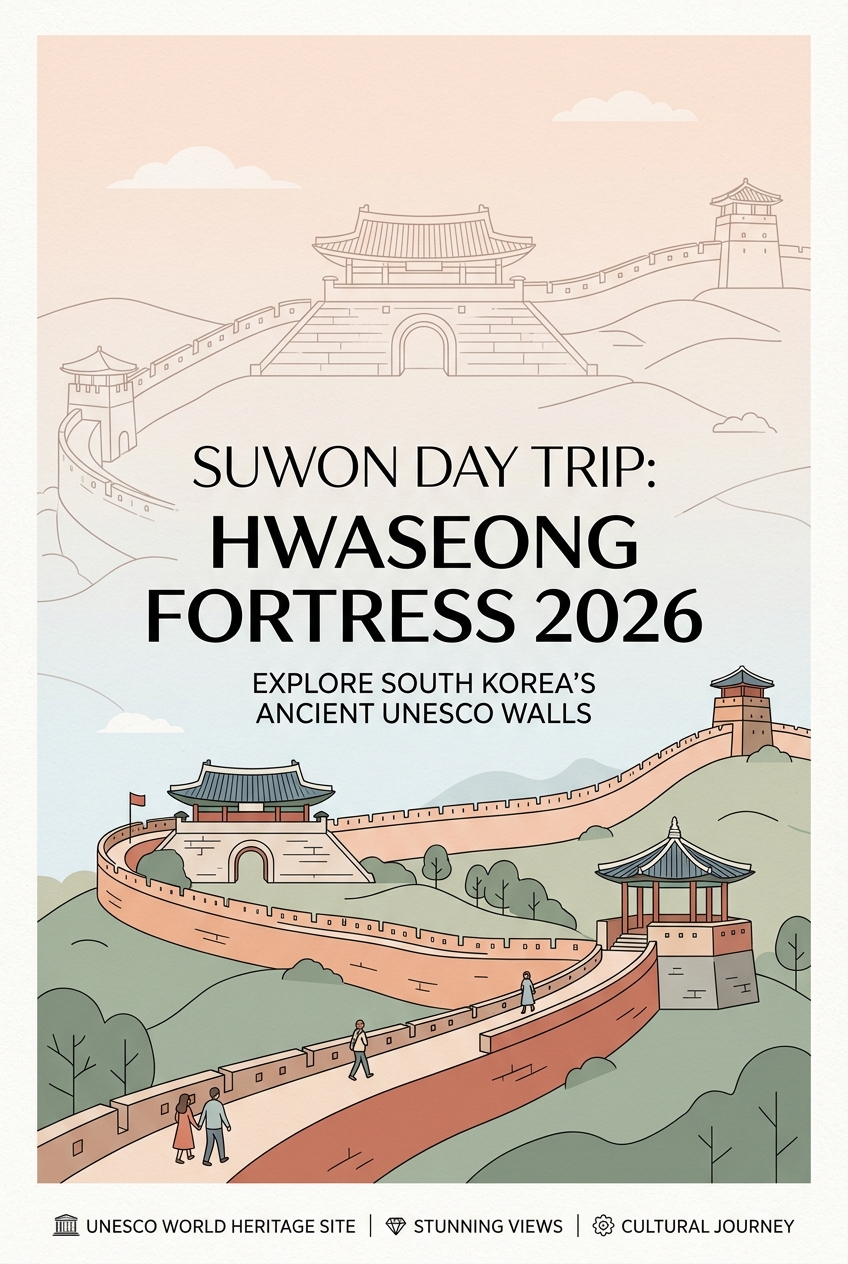
Suwon Hwaseong works well as a day trip because the main sights are close enough to combine without a tour. The difficult part is not getting from Seoul to Suwon Station. It is choosing where to enter the fortress area and how much of the 5.7-kilometer wall you actually want to walk.
This route starts at Hwaseong Haenggung Palace, continues through the most rewarding northern section of the wall, and ends in Haenggung-dong. It leaves room for lunch and breaks, and it includes a shorter option for hot, rainy, or low-energy days.
Quick plan
| Time | Stop | Why it is included |
|---|---|---|
| 09:00–10:30 | Travel from Seoul to Suwon Station | Train or Line 1, depending on budget and starting point |
| 10:30–11:15 | Suwon Station to Hwaseong Haenggung | Bus or taxi avoids an uninteresting long walk |
| 11:15–12:15 | Hwaseong Haenggung Palace | Best introduction to King Jeongjo’s Suwon project |
| 12:15–13:30 | Lunch near Haenggung-dong or Paldalmun | Many choices without a detour |
| 13:30–16:00 | Janganmun → Hwahongmun → Banghwasuryujeong | Scenic wall, gate, stream, and pavilion in one manageable section |
| 16:00 onward | Haenggung-dong cafe streets | Flexible finish before returning to Seoul |
Why Hwaseong is worth the trip
Hwaseong Fortress was built in the late eighteenth century under King Jeongjo. UNESCO describes it as a stone-and-brick fortress combining contemporary Eastern and Western military ideas. The walls follow the terrain around central Suwon and include gates, command posts, observation towers, and floodgates. It was inscribed on the World Heritage List in 1997.
The site is not a sealed archaeological park. Roads, homes, shops, and neighborhoods sit inside and around the walls. That mix is exactly what makes the visit different from a palace day in Seoul.
Getting from Seoul to Suwon
Option 1: Korail train from Seoul Station
This is usually the easiest choice when you are already near Seoul Station and want to reduce travel time. Search Seoul (서울) to Suwon (수원) on the official Korail booking service and choose a train that fits your morning. Fares and schedules vary by train, so check the day before rather than relying on an old screenshot.
Option 2: Seoul Subway Line 1
Line 1 is cheaper and does not require a reserved seat, but it takes longer and service patterns can be confusing. Check the destination displayed on the train and use Naver Map or KakaoMap for the departure time from your actual station. If the app offers an express service, confirm that Suwon is one of the stops before boarding.
A T-money card works for the subway and local buses. A reserved Korail ticket is separate.
Do not walk from Suwon Station unless you want the walk
Hwaseong Haenggung is roughly three kilometers from Suwon Station. The walk is possible, but it uses time and energy that are better spent on the palace and walls. Enter “Hwaseong Haenggung” (화성행궁) in Naver Map or KakaoMap and follow the current bus recommendation. A taxi is a sensible alternative for two or more people or in bad weather.
Show the driver this address if needed: 경기도 수원시 팔달구 정조로 825, 화성행궁.
Stop 1: Hwaseong Haenggung Palace
A haenggung was a temporary palace used by a king outside the main royal palace. King Jeongjo stayed here during visits connected to his father’s tomb, and the complex also served administrative functions.
As of the official Suwon tourism update checked on August 15, 2026:
- Hours: 09:00–18:00 year-round; last admission at 17:00
- Regular admission: adults ₩2,000; youth and military ₩1,500; children ₩1,000
- 2026 night opening: Friday–Sunday and public holidays through November 1, generally 18:00–21:30 with last entry at 21:00; festival dates may alter operations
Allow about an hour. If you enjoy architecture or historical interpretation, take longer; if the main goal is the wall walk, focus on the central halls and continue.
Stop 2: Choose the right wall section
Walking the entire circuit is possible, but it is not necessary for a satisfying first visit. The official Suwon tourism site suggests several one- to two-hour sections. For most visitors, the northern route offers the best balance:
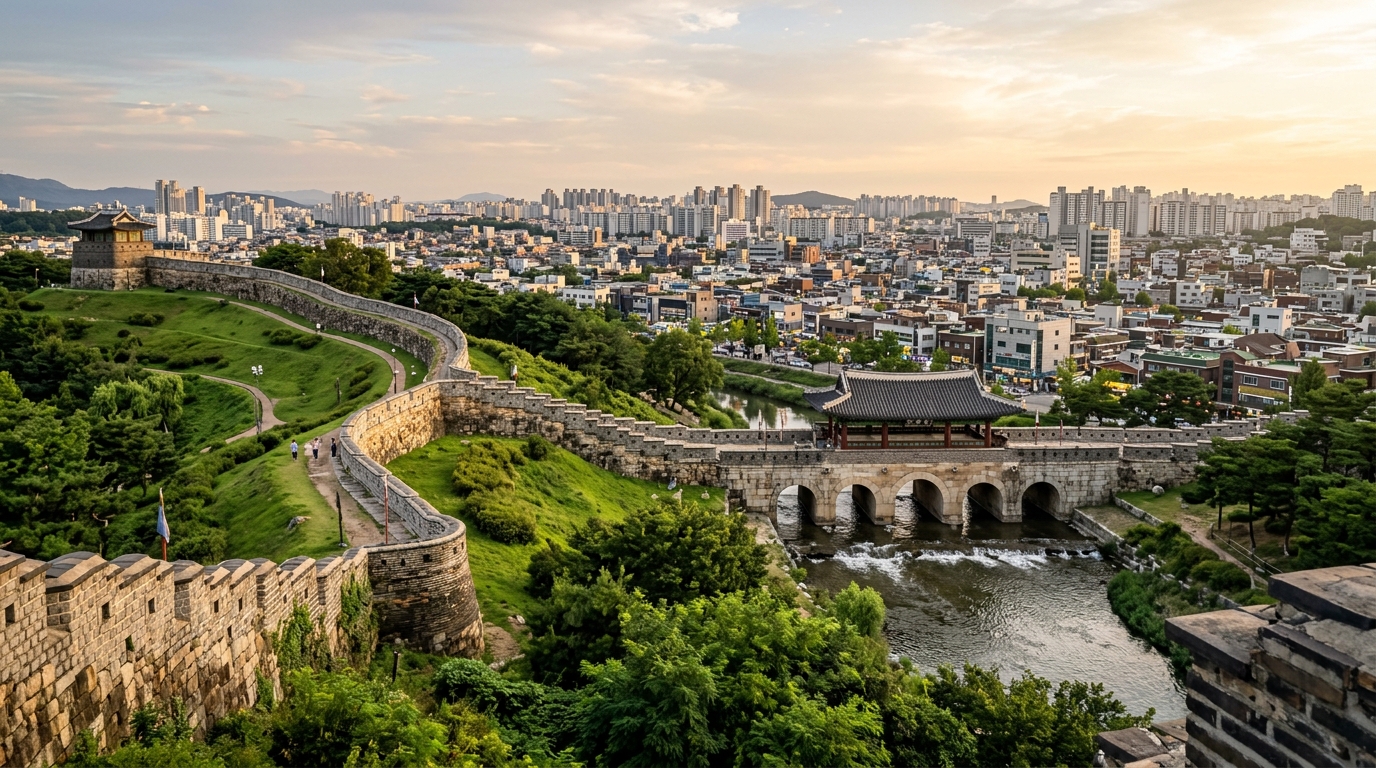
Janganmun Gate → Hwahongmun Floodgate → Banghwasuryujeong Pavilion → Yeonmudae area
This route includes a major gate, a stream crossing, open views, and less punishing climbing than the western section over Paldalsan. You can reverse the route depending on your lunch stop and bus connection.
If you want a steep climb and a wide view
Choose the western section from Paldalmun toward Seojangdae and Hwaseomun. The climb is more demanding and can be slippery after rain. It is a poor choice in midday summer heat, with a stroller, or if anyone in the group has knee problems.
Lunch without overplanning
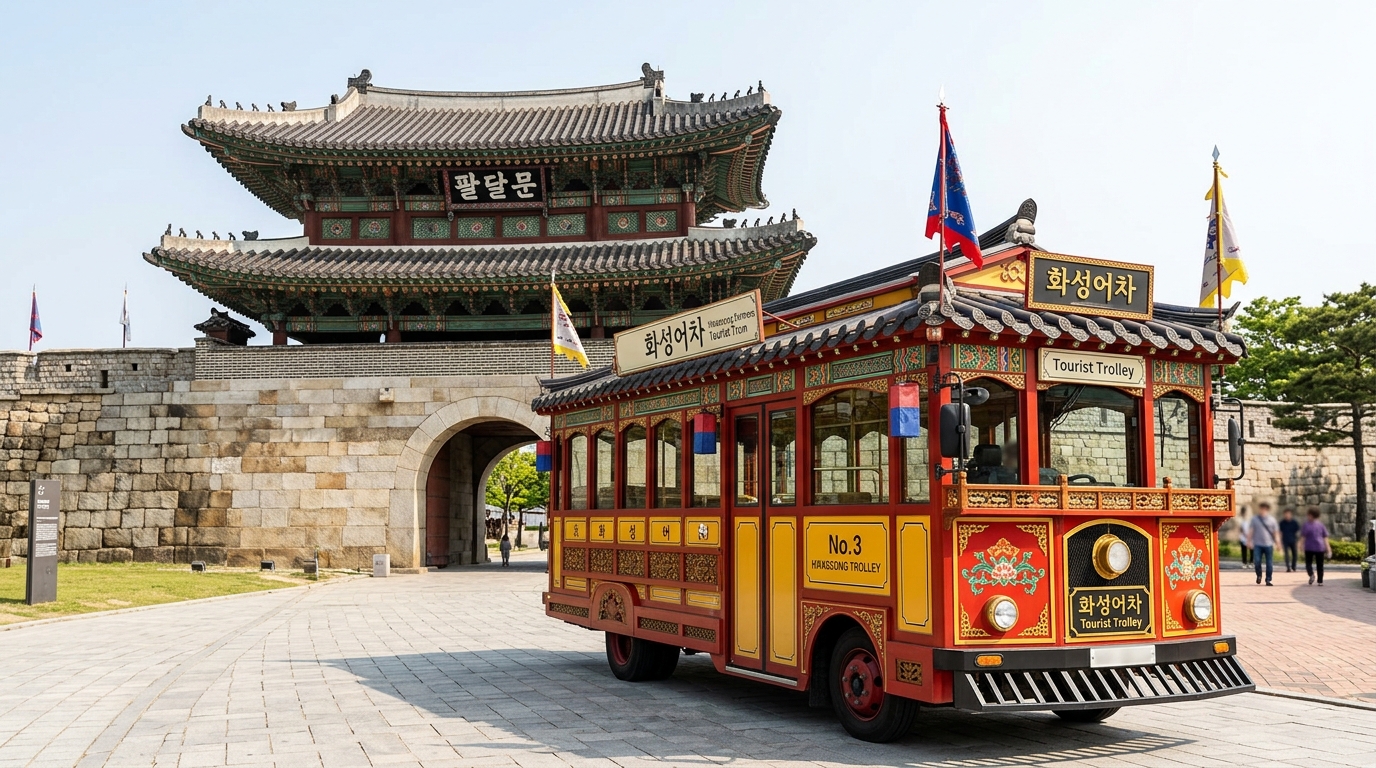
Suwon is known for galbi, but a famous restaurant is not required to make the trip worthwhile. Around Paldalmun, Haenggung-dong, and the palace you will find galbi, noodles, dumplings, Korean set meals, bakeries, and cafes. Check the latest opening hours in a Korean map app; restaurant turnover is faster than heritage-site information.
If you choose galbi, look at the price per portion and the minimum order before sitting down. Solo travelers may find noodles or a set meal easier than a barbecue restaurant that expects two portions.
Finish in Haenggung-dong

Haenggung-dong is useful as a flexible final stop, not a must-visit checklist. Rest, have coffee, browse small shops, or return to the wall for evening light. When you are ready to leave, use the map app again for the best bus to Suwon Station; the nearest stop depends on where you finish.
Lower-walking route for a shorter day
This option reduces walking but has not been verified as a step-free route. Before travel, check the specific gate, path surface, steps, and accessible transport arrangements.
Take a taxi from Suwon Station to Hwaseong Haenggung, visit the palace, have lunch nearby, then taxi or bus to Janganmun. From the gate, walk the relatively gentle section toward Hwahongmun and Banghwasuryujeong. Return by taxi or bus. This keeps the historical core while avoiding the Paldalsan climb and the full wall circuit.
What to bring
- Comfortable shoes with grip; several wall sections have steep or uneven steps
- Water and sun protection from late spring through early autumn
- A charged phone with Naver Map or KakaoMap
- A T-money card for local transit
- A backup plan for heavy rain, extreme heat, or icy winter paths
Related guides
- 7 Easy Day Trips from Seoul by Public Transport
- Korea Travel Budget for First-Time Visitors
- The Perfect 10-Day Trip to Seoul, Busan, and Gyeongju
Official sources
Update — October 27, 2026: Corrected the four image descriptions to the illustrated cover, floodgate, trolley and wall-walking scenes actually shown. Original image assets remain unchanged.


0 Comments