
F-Series Visa in South Korea: Common Mistakes Foreign Residents Should Avoid
Getting an F-series visa in South Korea can feel like a major milestone. Whether you hold an F-2, F-4, F-5, or F-6 visa, it often means more stability, more freedom, and a stronger foundation for your life in Korea.
But here is the part many foreign residents miss: an F-series visa is not something you can simply forget about after receiving it. Your status still needs to be maintained, and small mistakes can sometimes create problems when you renew, update your information, or apply for a more stable visa later.
This guide explains the common F-series visa mistakes foreign residents in Korea should avoid, including income checks, address reporting, tax records, work restrictions, time spent outside Korea, and legal or administrative issues.

8282 Check Box
- What this guide is about: Common mistakes that may affect F-series visa renewal, maintenance, or long-term stay in Korea.
- Who should read this: F-2, F-4, F-5, and F-6 visa holders, especially if you changed jobs, moved homes, became self-employed, got married, separated, or spent a long time outside Korea.
- What to check first: Your exact visa type, ARC/FRC expiration date, registered address, passport information, income record, and tax filing history.
Why F-Series Visa Holders Still Need to Be Careful
Many foreign residents think an F-series visa means they are fully settled in Korea. In many ways, that is true. F-series visas usually provide more stability than short-term work or study visas.
However, they are still immigration statuses. That means your income, tax records, address, legal record, family situation, or time spent outside Korea may still matter depending on your visa type and personal circumstances.
The difficult part is that immigration rules are not always explained clearly in everyday life. You may not receive a reminder every time a rule changes or every time you need to report something. In practice, the responsibility is usually on you to stay informed and keep your records clean.
For official immigration services, reservations, and civil applications, you can check the official HiKorea website. For government certificates and personal records, you may also need the official Government24 website.

Which F-Series Visa Holders Are Most Affected?
Not all F-series visa holders face the same risks. The exact rules depend on your visa type, your reason for staying in Korea, your income, your family situation, and your immigration history.
F-2 Visa Holders
Some F-2 visa holders, especially points-based F-2-7 holders, may need to pay close attention to income, tax filing, employment status, and renewal conditions. A drop in declared income or unclear tax records can become an issue during renewal.
F-4 Visa Holders
F-4 visa holders often enjoy broad freedom in Korea, but the visa is not the same as Korean citizenship. Certain types of work may still be restricted, and immigration-related reporting duties may still apply.
F-5 Permanent Residents
F-5 status is one of the most stable statuses for foreign residents in Korea. Even so, it is not completely risk-free. Serious legal issues, long absences from Korea, or immigration violations may still create problems depending on the case.
F-6 Marriage Visa Holders
F-6 visa holders may be reviewed based on marriage status, family circumstances, residence records, and legal issues. If there is separation, divorce, domestic conflict, or a major change in family situation, it is important to get proper advice before renewal.
Common Mistakes Foreign Residents Make with F-Series Visas
Most visa problems do not happen because someone intentionally broke the rules. They often happen because of small administrative mistakes, late reporting, unclear tax records, or advice from unofficial sources.
Mistake 1: Ignoring Income and Tax Records
For some F-series visa holders, especially points-based F-2 visa holders or people preparing for F-5 permanent residency, income can be an important factor.
The key point is not only how much money you earned. Immigration may look at your officially declared income. That means your tax filing record, income certificate, and payment history can matter more than what you simply received in your bank account.
This is especially important for freelancers, private tutors, business owners, creators, or people with irregular income. If your income was not properly reported, it may not help you when immigration reviews your case.
You can check tax-related records through the official Hometax website. If your situation is complicated, it is safer to speak with a tax professional or immigration specialist before your renewal period begins.
Mistake 2: Forgetting to Report a Change of Address
Changing your home address in Korea is not just a personal matter. Foreign residents usually need to report a change of residence within the required period. The exact rule can depend on your status and registration type, so you should confirm your case through HiKorea, your local immigration office, or your local community center.
This is one of the easiest mistakes to avoid, but it is also one of the most common. People move, update their housing contract, and assume everything is finished. But if your registered address is not updated, it may cause fines or problems with future immigration procedures.
Address changes may be reported through immigration, local district offices, community centers, or online services depending on your case. Before visiting in person, check whether a reservation is needed through HiKorea.
Mistake 3: Not Updating Passport or Personal Information
If you renew your passport, change your name, or have other important changes in your personal information, immigration records may need to be updated. Many foreign residents remember to renew their passport but forget that Korean immigration records may also need to be changed.
This can become a problem when you renew your visa, apply for a certificate, travel overseas, or deal with official documents in Korea.
A simple habit can prevent this: whenever your passport or legal identity information changes, check whether the change must also be reported to immigration.
Mistake 4: Assuming F-Series Visas Have No Work Restrictions
F-series visas usually provide more flexible work rights than many other visa types. However, “more flexible” does not always mean “unlimited.”
For example, some F-4 visa holders may face restrictions on certain types of simple labor or specific work categories. Other cases may depend on the nature of the job, the employer, or the person’s immigration history.
Before starting a new job, side business, freelance activity, or platform-based income activity, it is wise to confirm whether your visa type allows it. This is especially important if the work is outside your usual field or if you are not sure how the income will be reported.
Mistake 5: Relying Only on Social Media Advice
Facebook groups, Reddit posts, YouTube comments, and expat forums can be useful for hearing real experiences. But they should not be your final source for visa decisions.
Immigration rules can change. Also, two people with the same visa type may still have different results because their income, tax record, family situation, criminal record, or stay history is different.
Use community advice as a starting point, not as the final answer. For official confirmation, check HiKorea, call 1345 in Korea, or speak with a qualified immigration professional.
Mistake 6: Letting Small Fines Build Up
A single minor issue may not automatically destroy your visa status. However, repeated violations, unpaid fines, or a pattern of ignoring Korean rules can create a negative impression during immigration review.
This may include traffic fines, administrative penalties, local regulation violations, or unpaid government-related fees. The safer approach is simple: pay fines quickly, keep receipts, and avoid repeated issues.
Mistake 7: Spending Too Much Time Outside Korea Without Checking the Rules
For some long-term residents, time spent outside Korea can matter. This is especially important for people who are maintaining permanent residency, preparing for F-5, or trying to prove continuous residence in Korea.
If you plan to stay outside Korea for a long period, do not assume your status will remain safe automatically. Re-entry rules, residence continuity, and permit requirements can vary depending on your visa type and situation.
Before making a long overseas trip, check your visa conditions, re-entry rules, and expiration date through HiKorea or immigration.
Jin’s 8282 F-Series Visa Self-Check Plan
You do not need to panic. But you do need a simple system. Once a year, ideally before tax season or several months before your visa expiration date, do this quick self-check.
- Check your exact visa type: Do not just say “I have an F visa.” Confirm whether it is F-2, F-4, F-5, F-6, or another subtype.
- Check your expiration date: Set a calendar reminder several months before your visa or residence card expires.
- Check your registered address: Make sure your current home address matches your immigration or government records.
- Check your passport information: If you renewed your passport, confirm whether your immigration record also needs to be updated.
- Check your income certificate: If income matters for your visa, review your official income documents, not just your bank deposits.
- Check your tax filing: Make sure your income was properly reported and your taxes were handled correctly.
- Check unpaid fines: Pay any traffic, administrative, or government-related penalties as soon as possible.
- Check travel history: If you spent a long time outside Korea, ask whether it affects your renewal or permanent residency path.
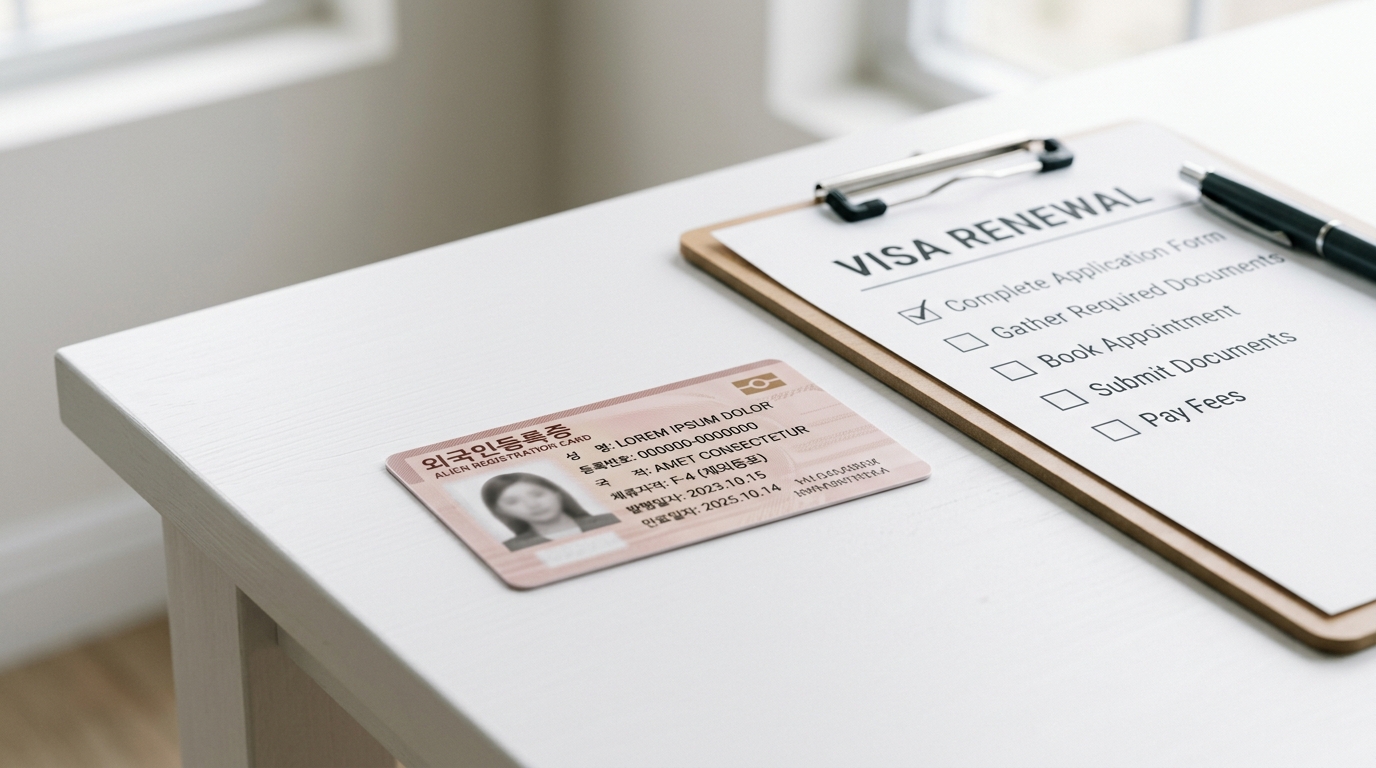
Documents You May Want to Keep in a Visa Folder
One of the best habits for long-term foreign residents in Korea is keeping a simple “visa folder.” This can be a physical folder, a cloud folder, or both.
- Copy of your ARC or residence card
- Copy of your passport information page
- Current housing contract
- Employment contract or business registration documents
- Income certificate
- Tax payment records
- Health insurance or pension-related documents, if relevant
- Marriage or family documents, if relevant to your visa
- Immigration receipts, approval notices, or previous application records
This may feel unnecessary when everything is going well. But when renewal season comes, having all documents ready can save time, stress, and unnecessary mistakes.
Useful Official Websites for Foreign Residents in Korea
Visa information can change, so it is better to confirm important details through official channels before making decisions.
- Visit the official HiKorea website for immigration services, visit reservations, and foreign resident applications.
- Check Government24 for Korean government certificates and public services.
- Use Hometax for tax records, income certificates, and tax-related services.
- Visit Korea Immigration Service for official immigration-related information.
Internal Guides You May Also Want to Read
If you are living in Korea long term, visa status is only one part of your daily life. You may also need to understand taxes, banking, housing, health insurance, and local administrative systems.
- How to Report Overseas Bank Accounts in Korea
- Korean Health Insurance Guide for Foreign Residents
- How to Use Government24 as a Foreigner in Korea
- Korean Housing Contract Checklist for Foreigners
Final Verdict: Protect Your F-Series Visa Before Problems Appear
An F-series visa can give foreign residents a much more stable life in South Korea. But stability does not mean you can ignore your immigration responsibilities.
The biggest mistakes are usually simple: forgetting to report an address change, not checking official income records, relying on old online advice, ignoring small fines, or waiting until the last minute before renewal.
The good news is that most of these problems are preventable. Check your records once a year, keep your documents organized, use official sources, and ask for professional help if your situation is complicated.
Your visa is more than a document. It is the foundation of your life in Korea. Protect it early, and you will save yourself a lot of stress later.
Disclaimer: This article is for general informational purposes only. Korean visa, immigration, tax, labor, pension, housing, and health insurance rules can change. Always confirm important details through official sources such as HiKorea, Government24, Hometax, 1345 immigration hotline, or a qualified professional before making decisions.
Need more practical Korea-life guides? Follow AllThingsK8282 for clear, realistic, and foreigner-friendly guides to living, working, traveling, and managing money in South Korea.


0 Comments